What Type of Rock Is Antelope Canyon Made Of?
Antelope Canyon is made primarily of Navajo Sandstone, a Jurassic-age desert sandstone. This guide explains how sandstone layers and flash floods created its famous slot canyon shape.
Antelope Canyon is made mainly of Navajo Sandstone, a durable but erodible sandstone that formed from ancient desert dunes. This rock type, combined with flash floods and long-term erosion, is what created the canyon’s narrow slot shape and smooth, flowing walls.
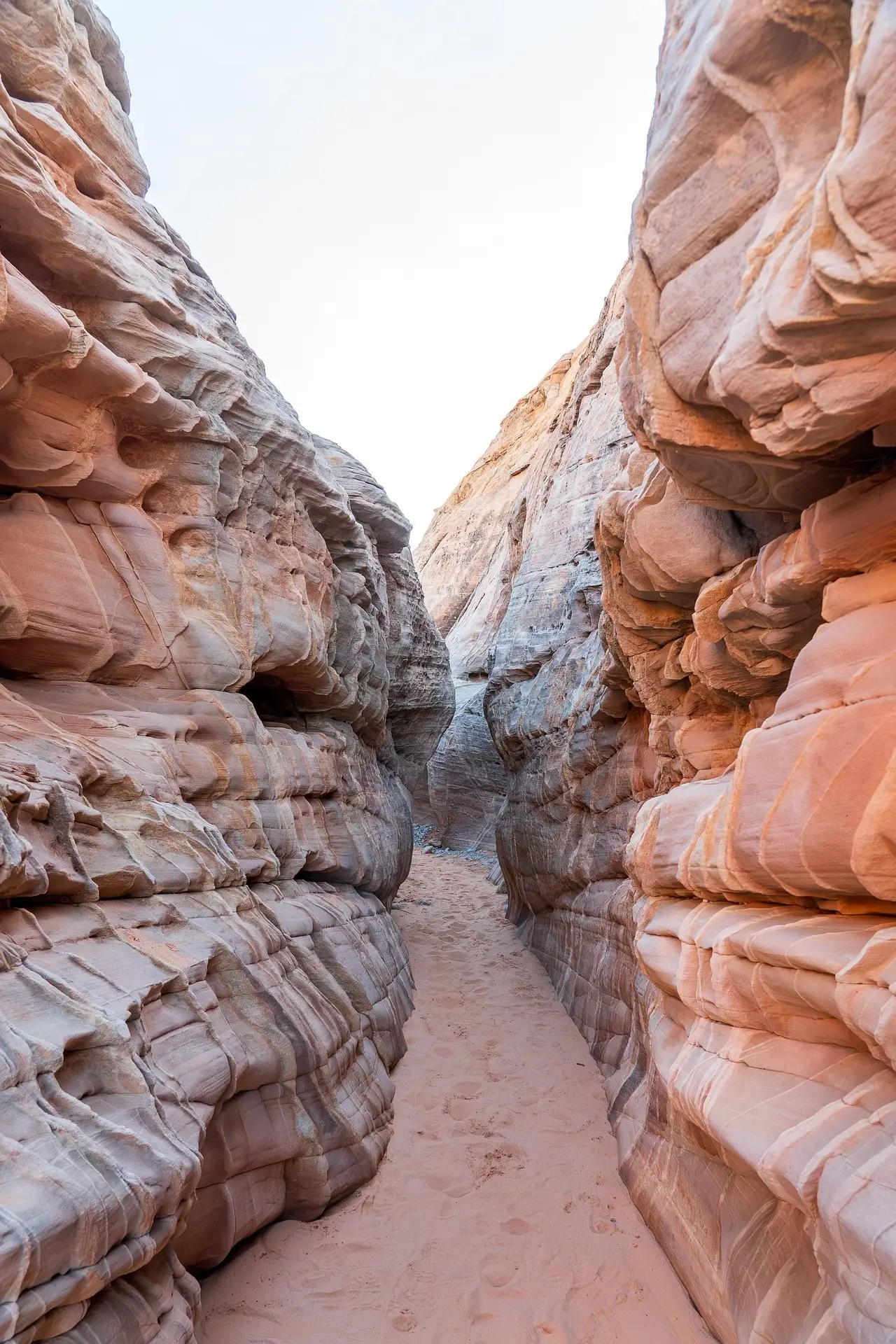
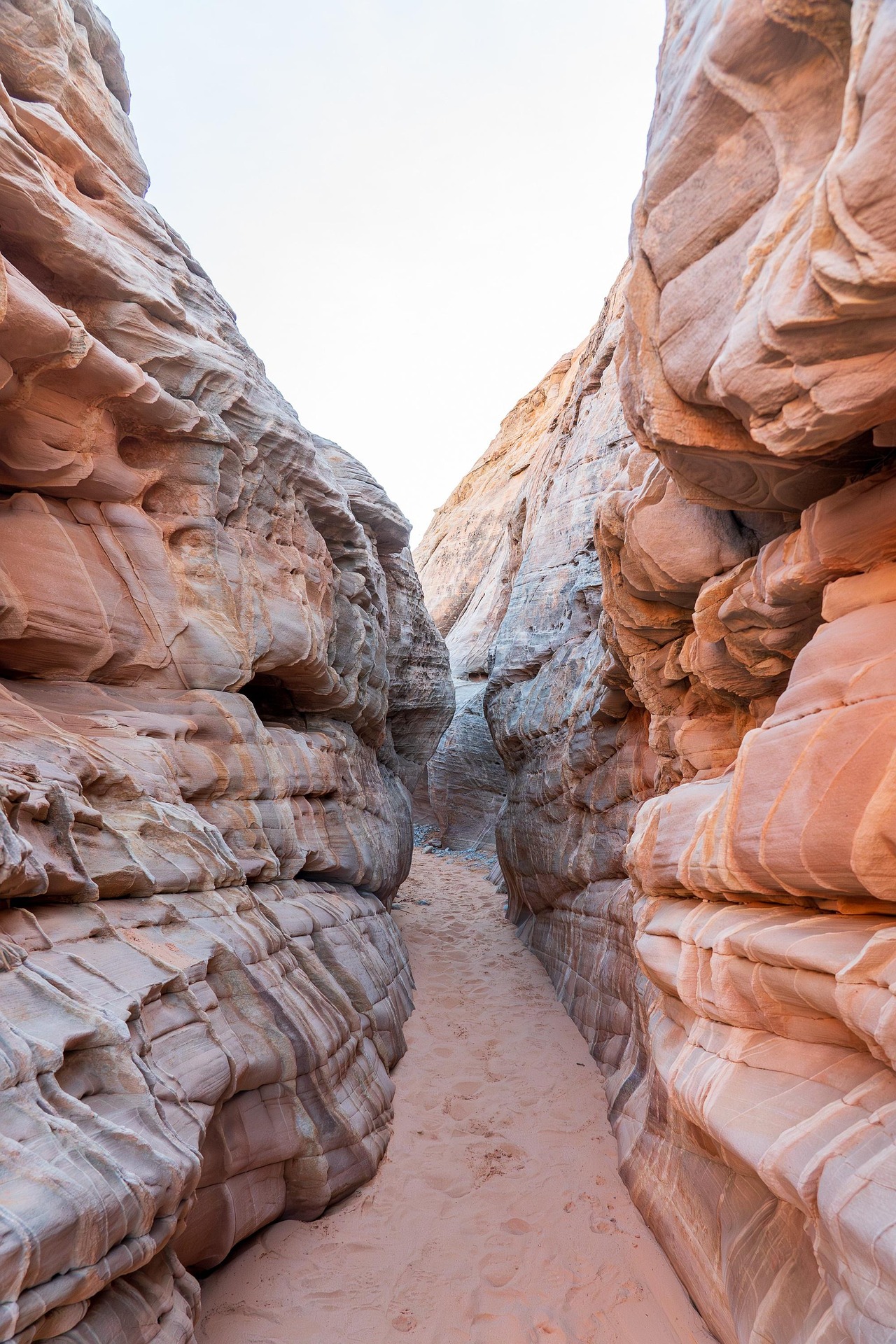
A slot canyon is a narrow, deep, and elongated canyon formed primarily by water erosion through soft rock (usually sandstone or limestone).
It is much deeper than it is wide—some are only a few feet across but can reach tens of meters in depth.
The smooth, wave-like walls and the play of light and shadow make them some of the most photogenic natural wonders on Earth.
What Is a Slot Canyon?
Most slot canyons in the world are found in the American Southwest, particularly on the Colorado Plateau, where layers of soft sandstone have been shaped by flash floods for millions of years.
The dry desert climate, occasional violent rainstorms, and unique geological structure make this region ideal for the formation of slot canyons.
| Name | Location (State) | Highlights |
|---|---|---|
| Antelope Canyon | Arizona | The most famous slot canyon in the world, known for its red sandstone walls and magical light beams. |
| Buckskin Gulch | Utah | The longest and deepest slot canyon on Earth, stretching over 13 miles (21 km). A challenging trek for experienced hikers. |
| The Narrows (Zion National Park) | Utah | A partially flooded slot canyon where visitors hike directly through the Virgin River—one of the most popular hikes in the U.S. |
| Peek-a-Boo & Spooky Gulch | Utah | Twin canyons known for their ultra-narrow passages and twisted sandstone shapes, perfect for adventurous explorers. |
| Little Wild Horse Canyon | Utah | A family-friendly slot canyon with stunning rock textures and gentle curves, ideal for beginners. |
| Cathedral Wash | Arizona | Located near the Grand Canyon, this canyon reveals layered sandstone and limestone, beautifully sculpted by water. |
The Birth of a Slot Canyon
Slot canyons are born through a combination of right kind of rock, geological uplift, and flash floods. Three key conditions must come together for a slot canyon to form.
- Type of Rock Layers
The first requirement for a slot canyon to form is the right kind of rock.
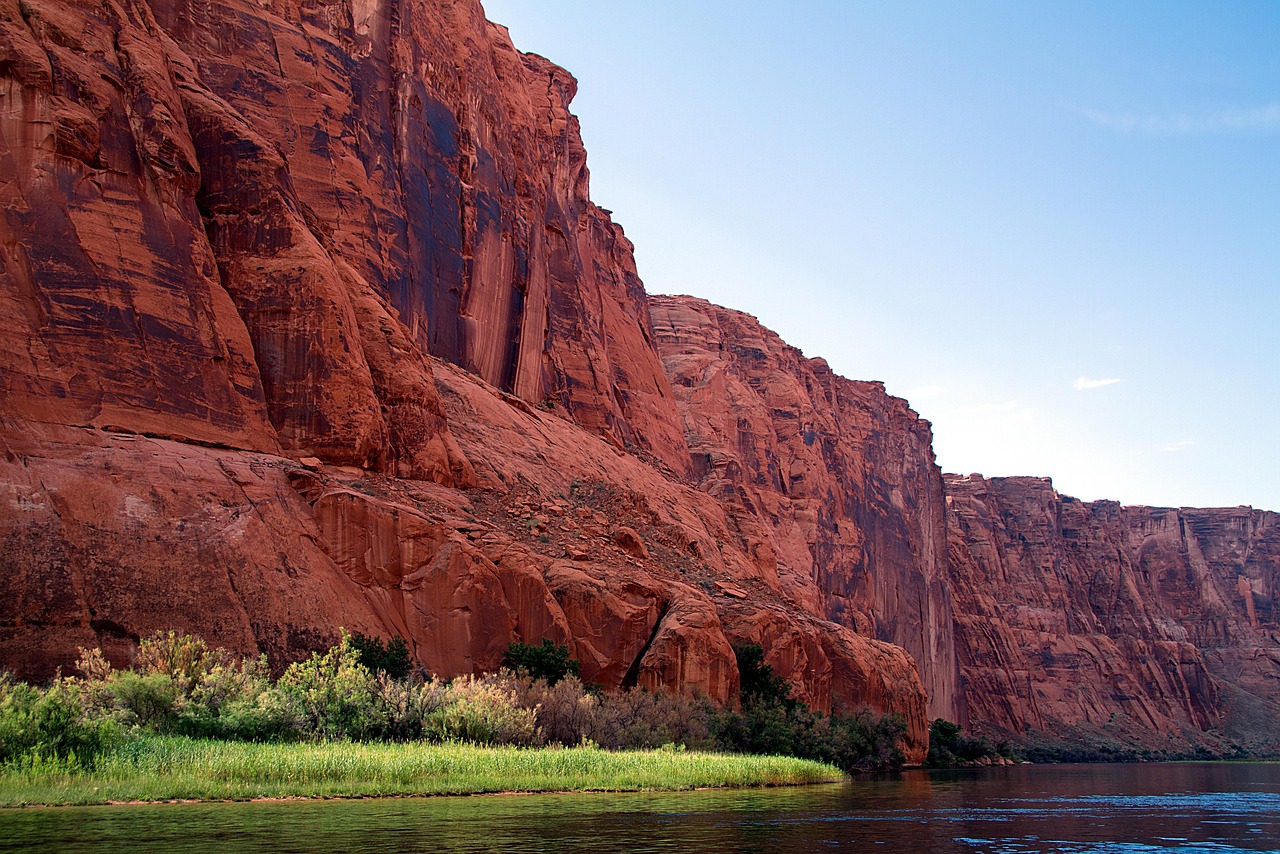
Most slot canyons are carved into sandstone or limestone, which strike a perfect balance between strength and softness. These sedimentary rocks are hard enough to maintain steep, vertical walls but soft enough to be slowly eroded by flowing water.
In the Colorado Plateau—which spans parts of Arizona, Utah, Colorado, and New Mexico—these rock layers are especially common. Over hundreds of millions of years, the region experienced shifting environments: ancient oceans, river deltas, and desert dune fields.
During marine periods, shells, corals, and chemical sediments accumulated on the seafloor, forming thick beds of limestone. Later, during dry desert ages, winds piled sand dunes hundreds of feet high; under pressure, these dunes compacted into sandstone, such as the famous Navajo Sandstone that shapes much of the Southwest’s canyon landscape.
These thick, relatively uniform rock layers provide the perfect “canvas” for nature to sculpt slot canyons—resisting collapse while allowing water to carve through over immense spans of time.
- Crustal Uplift and Rock Fractures
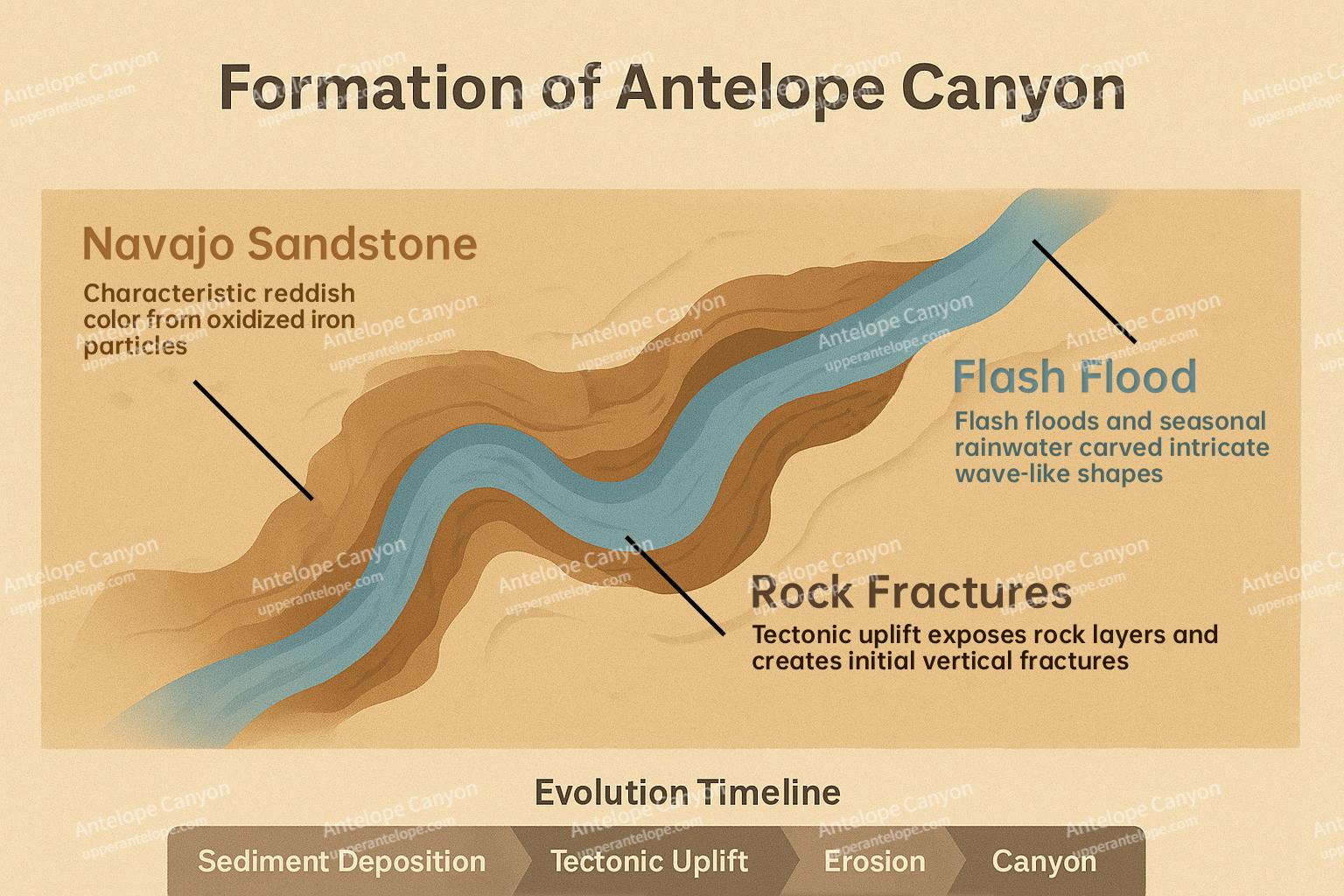
The second key factor is tectonic uplift, which exposes the rock layers and creates the initial cracks that guide future erosion.
Around 70 million years ago, during the Laramide Orogeny, the Colorado Plateau was slowly lifted thousands of feet above sea level. Unlike many mountain ranges that folded or broke apart during uplift, the plateau rose mostly intact, preserving its layered structure.
This uplift caused vertical joints and fractures to form in the sandstone and limestone. These cracks became natural pathways for rainwater and floodwater. Once the rock was exposed at the surface, it was vulnerable to weathering—and those fractures served as starting points for canyons to develop.
Without uplift and fracturing, there would be no vertical cracks for water to follow, and the dramatic, narrow canyons we see today could never exist.
- Short but Intense Rainfall (Flash Floods)
The final—and most dramatic—ingredient is flash flooding.
Slot canyons typically form in arid or semi-arid regions, where rainfall is rare but often arrives in short, violent bursts.
When sudden storms strike the desert, rainwater rushes over the bare sandstone surface, collecting into narrow channels and plunging into the existing cracks and joints.
These flash floods carry sand, gravel, and debris that act like liquid sandpaper, grinding against the canyon walls with tremendous force. Over thousands—or even millions—of years, this process deepens, widens, and polishes the cracks into smooth, twisting corridors of stone.
Each flood carves a little deeper, leaving behind the elegant curves and flowing shapes that define a slot canyon.
In summary, the formation of a slot canyon requires a perfect geological balance:
- Strong yet erodible rock layers, like sandstone and limestone.
- Tectonic uplift that creates fractures and exposes the rock.
- Powerful flash floods that carve through those fractures over time.
Together, these forces—earth, water, and time—create one of the most stunning landscapes on the planet.
Why Antelope Canyon Fits the Definition
Now that we understand what a slot canyon is and how it forms, let’s return to the question in the title: does Antelope Canyon qualify as a slot canyon? If we take the geological definition of a slot canyon and compare it to Antelope Canyon, every characteristic aligns perfectly.
| Feature | How Antelope Canyon Fits |
|---|---|
| Type of Rock Layers | Navajo Sandstone |
| Erosional Mechanism | Flash floods |
| Shape and Texture | Extremely narrow passage with smooth, wave-like walls |
| Location | Arid region of the Colorado Plateau |
Type of Rock Layer – Navajo Sandstone
Antelope Canyon is carved entirely into Navajo Sandstone, one of the most famous and visually striking rock formations on the Colorado Plateau. This sandstone is both strong enough to form steep, narrow walls and soft enough to be shaped by flowing water. Its fine grains and iron-rich minerals give the canyon its signature red and orange hues, which glow beautifully under sunlight.
Erosional Mechanism – Flash Floods
The canyon owes its existence to countless flash floods that have swept through the area over thousands of years. These floods originate from the higher desert mesas and drainage basins above the canyon—especially from the flat, open plains that surround Page, Arizona. During sudden desert rainstorms, rainwater cannot soak into the hard sandstone surface; instead, it rushes downhill, converging into narrow washes that funnel directly into the canyon’s cracks. As torrents of muddy water plunge downward, they carry sand and debris that scour and polish the Navajo Sandstone. Each flood deepens the canyon a little more, sculpting the smooth, flowing curves we see today.
Shape – Narrow, Smooth, and Wave-Like Walls
True to the definition of a slot canyon, Antelope Canyon is extremely narrow—at points, less than a few feet wide—but drops dramatically in depth. Its walls are silky smooth, undulating like frozen waves. The narrow passages twist and turn, creating a dreamlike labyrinth that perfectly embodies the “slot” structure.
Location – Arid Colorado Plateau
Antelope Canyon sits squarely within the Colorado Plateau, a vast region of high desert that spans several southwestern U.S. states. This arid environment, with its combination of soft sandstone layers, sparse vegetation, and occasional violent storms, provides ideal conditions for slot canyon formation. Few other regions on Earth offer such a perfect setting.
Because of this ongoing process, the canyon is both ancient and alive—constantly changing, even as it preserves millions of years of geological history.
A Living Example of Nature’s Design
Antelope Canyon is the textbook definition of a slot canyon:
- It is much deeper than it is wide, in some places only a few feet across but over 120 feet deep.
- Its walls are made of fine-grained sandstone, shaped by flash flood erosion.
- It was formed on a tectonically uplifted plateau, where cracks guided the path of erosion.
When sunlight filters through the narrow opening above, the beams illuminate the canyon’s curving walls in shades of orange, gold, and violet—visual proof of the water and time that carved it.
For those who wish to witness this natural wonder firsthand, you must book either Upper Antelope Canyon or Lower Antelope Canyon before your visit. Guided entry protects the canyon while helping preserve its fragile beauty.
Every ripple, every smooth bend in the stone tells the same story: the collaboration of earth, water, and light.
That is why Antelope Canyon is not only called a slot canyon—it defines what a slot canyon truly is.